
Welcome to Tanzania
Tanzania has almost 38% of its land reserved as protected areas, one of the world’s highest percentage. Tanzania boasts 16 national parks and is home to a large variety of animal life. Among the large mammals include the Big five, cheetahs, wildebeest, giraffes, hippopotamuses and various antelopes. Tanzania’s most well known wildlife attractions are located in the northern part of the country and include the Serengeti National Park, Tarangire National Park and Lake Manyara National Park.
The Serengeti National park encompasses the world-famous great migrations of animals. The Serengeti National Park is the most popular park in the country and had the chance to host more than 330,000 visitors in 2012.
Â

The north is also home to the Ngorongoro Conservation Area. The Ngorongoro Conservation Area includes the Ngorongoro Crater, which is an extinct volcanic caldera with lions, hippopotamus, elephants, various types of antelope, the endangered black rhinoceros, and large herds of wildebeest and zebra. Olduvai Gorge, considered to be the seat of humanity after the discovery of the earliest known specimens of the human genus, Homo habilis as well as early hominidae, such as Paranthropus boisei also lies within the conservation area.
The western part of Tanzania includes the Mahale, Katavi, and Gombe national parks, the latter of which is the site of Jane Goodall’s ongoing study, begun in 1960, of chimpanzee behavior. The country is also particularly rich in plant diversity, the Tanzania National Parks Authority has an entire national park the Kitulo National Park dedicated to flowers. There is a wide variety of biomass across the nation.
Mount Kilimanjaro
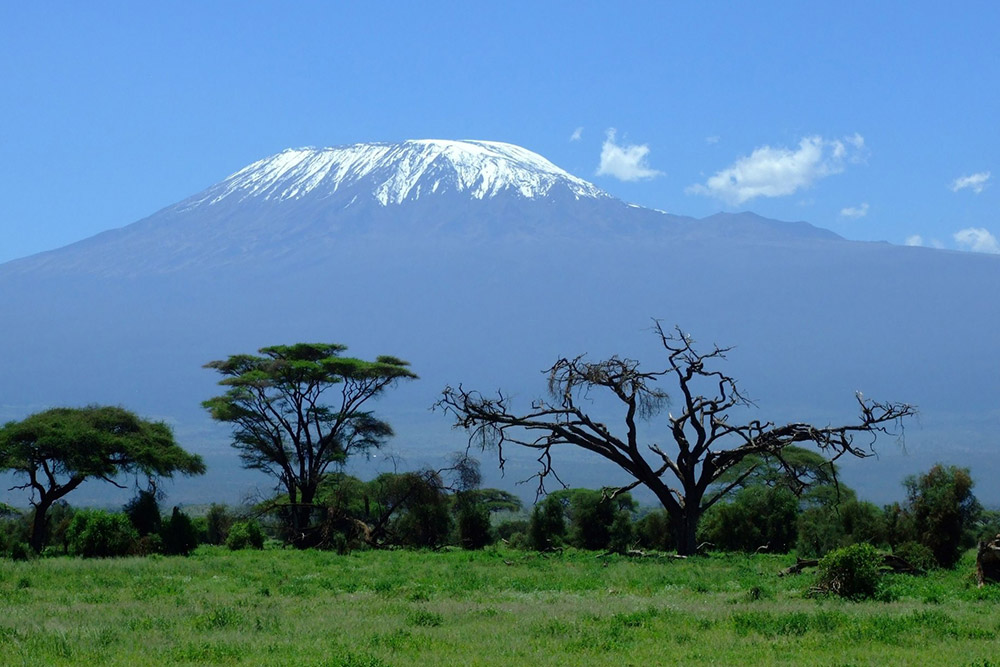
Also known as the roof of Africa, Mount Kilimanjaro is a UNESCO World Heritage site and the highest peak in Africa. The mountain (now a dormant volcano) rises approximately 16,000 feet from its base to 19,341 feet above sea level. The mountain is located in the north of the country on the border with Kenya in the town of Moshi and is accessible via Kilimanjaro International Airport. The airport also provides a gateway for tourists to all northern safari circuits. The mountain is part of Kilimanjaro National Park and is the second most popular park in the country and roughly 20,000 visitors trek the mountain every year.
The mountain is one of the most accessible high peaks in the world and has an average success rate of around 65%.