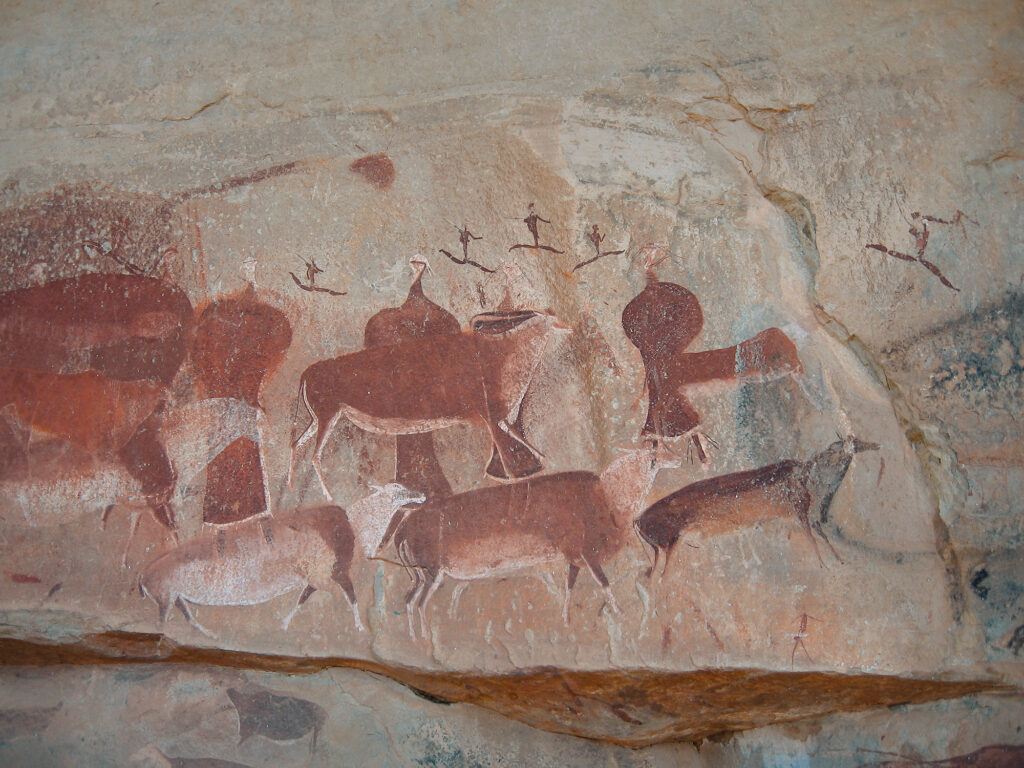
Namibia boasts some of the world’s oldest rock paintings and engravings, which have been attributed to ancestors of Bushmen. The scenes are naturalistic depictions of animals, people, hunting, battles and social rituals. Local geology determined the usage of color in the paintings. Some are monochrome pictures in red, but many are multicolored, using ground-up earth pigments mixed with animal fat to produce ‘paints’ of red, brown, yellow, blue, violet, grey, black and white.
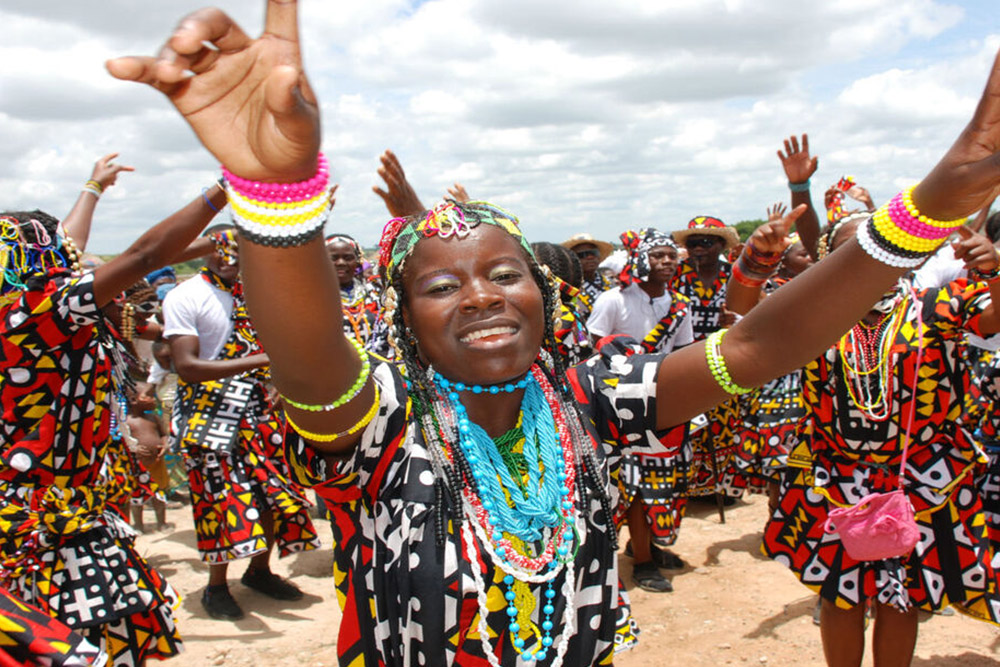
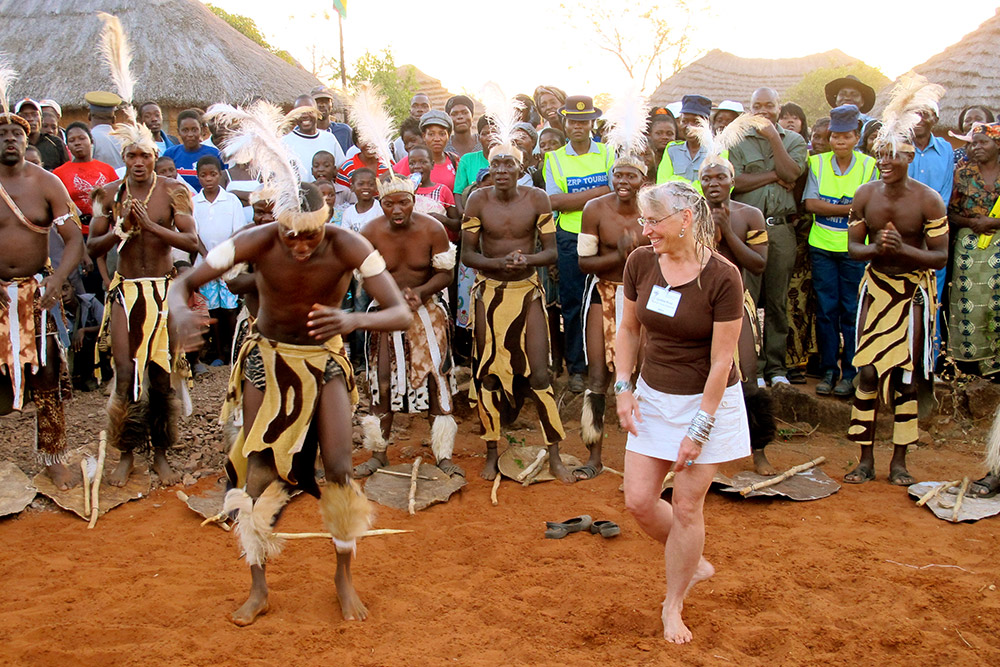
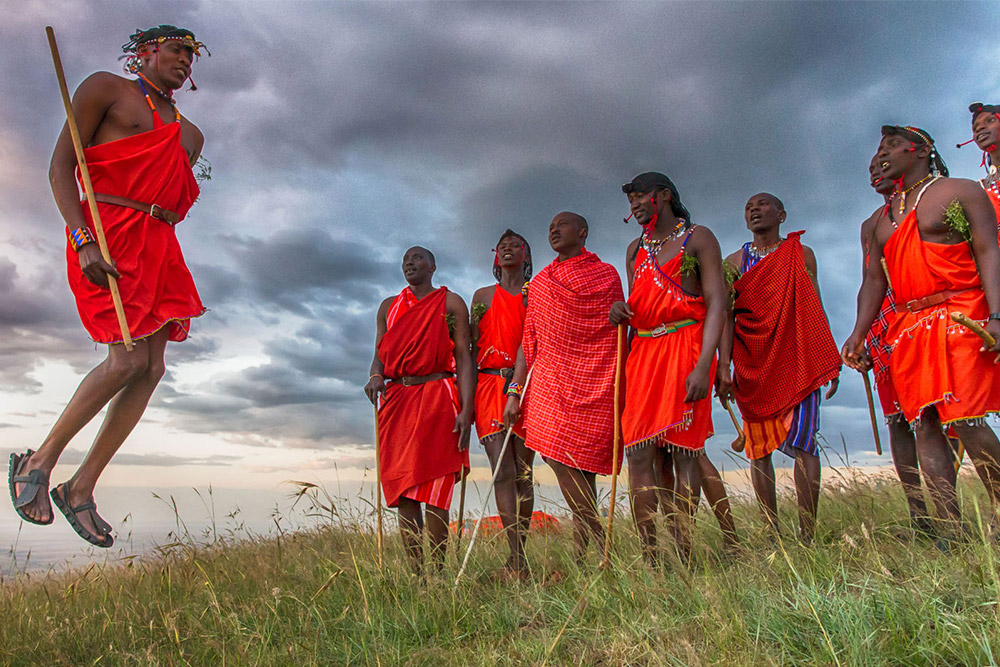
Rock engravings have also been found, often in areas where there is an absence of smooth, sheltered rock surfaces to paint on. However, there is more to Namibian creativity than just rock paintings. Traditional arts and crafts include basketry, woodcarving, leatherwork, beadwork, pottery, music-making and dancing. More contemporary arts and crafts encompass textile weaving and embroidery, sculptures, print-making and theater.
From cave paintings to the current and contemporary forms of visual art, Namibia is a country with artists carrying massive potential to produce polyphonic and contemporary art in all its forms. This means that there is a vast untapped potential of visual art and artists. Visual artists are individuals behind acts of art. They include everything they experience, everything they feel, everything they hear, and everything they see into artefacts.
Art reflects upon the single human experience. For example, phenomenology focuses on examination of conscious experiences from the subjective or first person point of view. Individual artists have a sensation of something that is then translated into an artefact or an act of art. Artists envision life experiences into art forms. Yet only through glimpses of acts and endeavors from the visual artist herself/himself do these artefacts emerge. It represents the experience of an individual made tangible through their mind and craft.
For example, the landscapes of Namibia have inspired many with their extreme beauty, not to mention the urban contemporary artist who has seen the world through a concept or a performance. All art forms, especially the visual arts, tickle the senses people (of which the artist themselves form a part of). The difference is that the visual artist shall not sidestep the potential seen and experienced, but will rather rush to document the experienced – to share their vision with all of us.
Certainly, landscapes are rather common starting point to be discussed in the context of contemporary visual art. Or are they? Can they take another futuristic and post-contemporary form? Artists can answer this question to themselves.
Viewing of art and working as an artist enhances societies. Our aesthetic environment influences our wellbeing. Creativity solves social challenges and improves how we feel about ourselves and the world around us and other people. Looking at art – we look at ourselves in the reaction to that art. Art soothes our souls, the main reason we need it to step out of the gallery space. Art to the people. People to the art. To question and produce news questions and reflections on art on a larger societal scale.
This mandate will help us all – as a society – realize our even utopian dreams that there is more to art than meets the eye. Art is not merely ‘stuff that hangs on walls’ to enhance our private lives, it connects the humans to each other. Different forms of art are part of a creative life and a means to survive the complexity of the human life. It is an aesthetic paradigm that releases stress in society. Or sometimes just art for art’s sake. Polyphony.
We must live to enact the future to want to see it, and not merely wait for the future to happen. Imagine if ‘we’ all in our everyday life could become individual transformers of our society towards the better version of it. It is not about the artist themselves, nor the ego behind the production, but about the impact an artefact or artistic act can have on the society – the humility to give, share, polyphony, diversity and acceptance.